Stemmed wine glasses are usually better for formal dining, careful tasting and chilled wines because the stem keeps the hand away from the bowl. Stemless glasses are more stable, easier to store and well suited to relaxed meals. The stem itself does not shape aroma. The bowl does. Choose according to the wine, the available table space and how the glass will actually be held.
What does the stem actually change?
The stem gives the hand a place to hold the glass without touching the bowl.
That separation has practical consequences. It reduces fingerprints across the surface and limits direct warmth from the hand. The latter matters most with sparkling wine, white wine and rosé, which are generally served cooler than many red wines. The Wine & Spirit Education Trust notes that holding the bowl is one way to warm wine deliberately, which also explains why a stem helps preserve a cooler serving temperature.
A stem can also make swirling easier. The bowl moves in a controlled circle while the hand remains below the wine. This is useful during tasting, when swirling helps mix volatile aromas with the air inside the glass. WSET advises that swirling can also be done with the base resting on the table, a wise option when enthusiasm has arrived before technique.
The stem changes handling. It does not rescue a badly proportioned bowl.
Does stemless glassware affect the taste of wine?
A stemless glass does not inherently spoil wine. Its bowl shape, size and rim remain the more important factors in how aromas gather and how the wine reaches the mouth.
WSET recommends comparing the same wine in a straight-sided tumbler and a larger tulip-shaped wine glass because the size and shape can change the tasting experience. The useful distinction is therefore between bowl designs, not simply between a glass with a stem and one without.
A well-shaped stemless wine glass can use the same tapered bowl logic as stemware. Riedel’s O Wine Tumbler, for example, adapts varietal-specific bowl shapes into a stemless form. This does not prove that every stemless glass performs equally. It does show that removing the stem does not require abandoning wine-focused proportions.
The hand can warm the wine more quickly because it rests directly around the bowl. Whether this matters depends on the wine, room temperature and pace of drinking. A chilled white held continuously during a long conversation will notice. A generous red set down between sips may be less offended.
Stemmed and stemless wine glasses compared
| Consideration | Stemmed wine glass | Stemless wine glass |
|---|---|---|
| Hand position | Held by the stem or lower base | Held around the bowl |
| Temperature control | Keeps direct hand warmth away from the wine | Hand contact can warm the bowl |
| Stability | Taller with a higher centre of gravity | Lower and generally harder to tip |
| Storage | Requires more vertical space | Fits more easily into many cabinets |
| Fingerprints | Fewer marks on the bowl when held correctly | Marks are more likely |
| Swirling | Easy to control by the stem | Possible, but grip and bowl shape matter |
| Table character | Formal, vertical and ceremonial | Relaxed, compact and contemporary |
| Versatility | Primarily designed for wine service | Often useful for wine, water and mixed drinks |
| Best suited to | Tastings, formal dinners and slower service | Casual meals, smaller tables and everyday use |
When should you choose stemmed wine glasses?
Choose stemmed glasses when temperature, presentation and precise handling matter.
A cool Sauvignon Blanc, Riesling or sparkling wine benefits from reduced contact between the hand and bowl. A broad red-wine glass also becomes easier to turn and examine when held by a well-balanced stem.
Stemware brings vertical rhythm to a table. The foot establishes a clear position above the knives, while the bowl sits above plates, linen and lower tumblers. This can make a formal setting easier to read when several glasses are present.
The stem also preserves a clear view of the wine. Fingerprints remain below the bowl, which matters when colour and clarity are part of the pleasure. Decanter notes that stems help keep the glass free of fingerprints and limit warming from the hand.
Stemmed glasses are especially useful for:
- Formal or celebratory dinners
- Wine tastings
- Sparkling, white and rosé wines
- Slowly enjoyed bottles
- Tables where glassware contributes to the visual structure
- Guests who enjoy swirling and examining the wine
The stem has earned its place. It has also acquired an impressive amount of etiquette around the simple task of holding a drink.
When does stemless glassware make more sense?
Stemless glasses suit occasions where stability, cabinet space and relaxed handling matter more than traditional presentation.
Their lower centre of gravity makes them less prone to tipping. There is no narrow stem to catch against a sleeve, serving platter or neighbouring glass. This is useful on small dining tables and at gatherings where people move between rooms.
Storage is simpler. Stemless glasses fit on shorter shelves and can often sit beside everyday tumblers. They can also serve water, spritzes or other drinks, provided the bowl and rim suit the purpose.
Riedel describes its stemless O range as easy to store and intended for everyday use. The manufacturer retains wine-specific bowl shapes while removing the stem and base, treating convenience as a design decision instead of an apology.
Choose stemless wine glasses for:
- Casual dinners
- Compact tables
- Outdoor meals on stable surfaces
- Households with limited cabinet height
- Shorter, sociable pours
- Settings where the glass may also serve water or a spritz
Stemless does not mean careless. The rim, bowl taper and balance in the hand still deserve attention.
Which is better for red wine?
Both forms can serve red wine well when the bowl has enough width and a suitably tapered opening.
A broad bowl gives the wine more exposed surface area, while a narrower upper section helps gather aroma. Those proportions matter more than the stem. Riedel builds both stemmed and stemless glasses around wine-specific bowl shapes, while WSET encourages drinkers to test how different glass shapes alter their perception of the same wine.
Stemmed glasses remain the stronger choice for a structured red that will be examined and enjoyed over time. The hand stays away from the bowl, and the stem offers controlled movement.
Stemless glasses work comfortably for softer, approachable reds served at relaxed dinners. Set the glass down between sips if the room is warm. Wine is patient, but it does keep track of the thermostat.
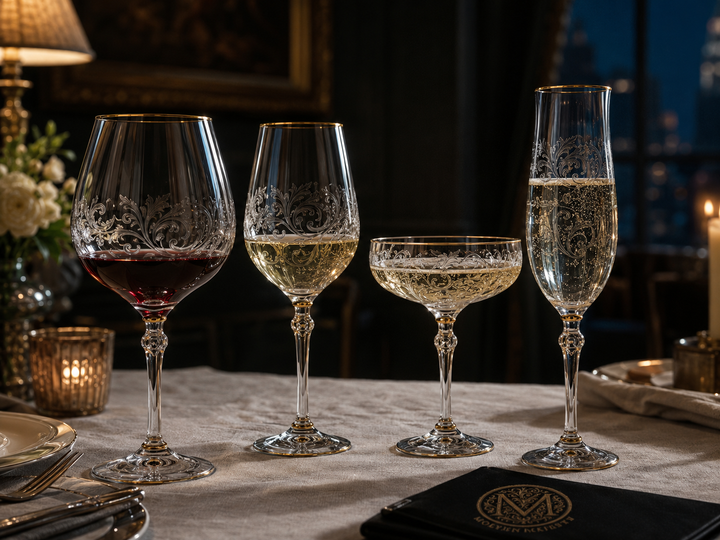
For Molten Majesty, the Ascend Bordeaux Wine Glass uses a broad, tapered bowl on a tall stem, while the Ascend Stemless Wine Glass places a soft tulip silhouette over a weighted base. The two forms solve the same general problem through different relationships with the hand.
Which is better for white wine?
Stemmed glasses have a practical advantage for chilled white wine because they reduce direct warmth from the hand.
A smaller tulip-shaped bowl can help preserve a focused aromatic space while limiting the exposed surface. The glass should still leave enough room to swirl gently.
The Ascend Sauvignon Wine Glass uses a stem and a tall tulip bowl intended for Sauvignon Blanc, Pinot Grigio and dry Riesling. Its product guidance specifically connects the stem with keeping the bowl cool during use.
A stemless glass remains suitable for white wine when convenience is the priority. Pour modestly, hold it lower on the bowl and return it to the table between sips. A large pour warms faster in any glass, regardless of how confidently it was served.
For formal white-wine service, choose a stem. For a relaxed glass at the kitchen table, the stemless option is entirely at home.
What belongs at a formal dinner?
Stemmed wine glasses usually belong at a formal dinner because they establish clearer visual hierarchy and support traditional wine service.
They also leave room for a lower water tumbler, making the two vessels easy to distinguish. When several wines are served, a line or arc of stems creates an understandable order without placing every bowl at the same height.
That does not mean a dinner becomes informal the moment a stemless glass appears. A carefully proportioned stemless glass can sit beautifully beside restrained dinnerware, particularly when the meal has a modern or intimate character.
The better question is whether the glass suits the rest of the table.
A heavy stemless glass beside very fine porcelain may feel visually grounded or simply heavy. A tall goblet on a narrow table may bring grace or remove the remaining space for bread. The table has no loyalty to categories. It responds to proportion.
Which form is easier to live with?
Stemless glasses are easier to store and generally more forgiving during crowded gatherings. Stemmed glasses provide better temperature control and cleaner presentation but require more vertical cabinet space and careful handling.
Cleaning also differs.
Stemmed glasses need support at the bowl and base. The bowl and stem should never be twisted in opposite directions while drying. Stemless glasses remove that vulnerable connection, though their bowls still require protection from abrasive cleaning and sudden temperature changes.
Both Ascend forms carry hand-applied gold rims and are listed as hand-wash only. Their exact product instructions take priority over general glassware advice.
For washing technique, see How to Clean Crystal Glassware Without Clouding or Scratches. For cabinet placement, use How to Store Crystal Glassware Without Chips, Dust or Pressure Marks.
From the atelier: begin with the bowl, then judge the base
When comparing two wine glasses, begin with the bowl.
Look at its widest point, the taper toward the rim and the volume left above a normal pour. These qualities govern how the wine moves and where aroma collects.
Then examine how the bowl is supported.
On stemware, the transition from bowl to stem should feel structurally calm. The foot must be wide enough to support the height without appearing oversized. The glass should lift without the bowl pulling forward or sideways.
On a stemless glass, the lower body must feel secure in the hand. A weighted base can add stability, but excessive thickness may make the wine feel visually distant. The curve should invite a natural grip without encouraging the hand to cover the entire bowl.
A stem gives the form elevation. A weighted base gives it gravity. Neither compensates for poor proportion.
How to choose for your own table
Choose stemmed glasses when:
- You regularly serve chilled wine
- Wine tasting matters to the evening
- Your table has enough space between settings
- You prefer a formal visual rhythm
- You enjoy holding and swirling by the stem
Choose stemless glasses when:
- Storage height is limited
- The table is small or frequently crowded
- You prefer lower, more stable drinkware
- Wine service is informal
- You want the glass to work for other drinks
Choose both when the household moves between formal dinners and ordinary evenings.
The Ascend Collection includes a stemless wine glass alongside stemmed Bordeaux and Sauvignon forms, allowing the same engraved language and gold rim to appear across different styles of service.
That is often the most useful answer. The stemmed glass can attend dinner properly. The stemless glass can remain afterward when the plates have gone and nobody is consulting the seating plan.