Wine glass shapes are designed around a few practical variables: how much surface area the wine has, how much air sits above it, how aromas gather near the rim and how comfortably the glass can be swirled and held. Large, broad bowls generally suit fuller or more aromatic reds. Smaller tulip-shaped bowls work well for many whites. Sparkling wine introduces its own choice between tulips, flutes and coupes.
Research supports the broader idea that glass shape matters. In a study of 181 participants, ratings of wine odour changed when the same wine was served in differently shaped glasses, and the effect was not explained simply by which glass participants found more attractive. The study was published in Appetite in 2003.
You do not, however, need seventeen stems and a working knowledge of every French appellation before opening a bottle.
What parts of a wine glass shape actually matter?
Before naming individual styles, look at the glass itself.
Bowl volume
The bowl determines how much room the wine has to move and how much empty space remains above the pour.
A larger bowl allows a modest serving to spread across more glass and leaves more room for swirling. That movement helps volatile aroma compounds move from the liquid into the headspace, where the nose can detect them. WSET recommends leaving enough empty space to swirl rather than filling a wine glass high into the bowl. Its tasting guidance explains the role of swirling in releasing aromas.
Width at the wine line
A broad lower bowl gives the poured wine more exposed surface than a narrow vessel at the same depth.
This is one reason many red wine glasses are generous around their widest point. It creates space for the wine to move and increases contact between the liquid and the air above it.
The effect is physical, although there is no useful rule stating that more air is always better. A delicate white and a structured red do not necessarily benefit from being treated identically.
Taper toward the rim
The curve above the widest part of the glass shapes the headspace.
A tulip bowl widens below and closes somewhat toward the top. Aromas released from the wine collect within this space before reaching the rim.
A 2015 study used an imaging system to map ethanol vapour above wine served in different vessel shapes and found distinct vapour distributions depending on glass geometry. The research appeared in The Analyst.
The useful lesson is less dramatic than some glassware marketing suggests. Shape changes what happens above the wine. It does not turn an indifferent bottle into a great one.
Rim diameter
A wide opening allows aromas to disperse more freely and gives the drinker greater physical access to the wine.
A narrower opening holds more of the headspace inside the bowl. Extreme narrowness can become restrictive, particularly when the wine has a complex aromatic profile.
The rim also changes how far the glass must be tilted to drink from it, which affects the flow of wine into the mouth. Claims that different rims can precisely direct sweetness or acidity to separate areas of the tongue should be treated cautiously. The old idea of rigid taste zones on the tongue is not a sound basis for choosing glassware.
Wine glass shapes at a glance
| Glass shape | Typical form | Commonly used for | Main design idea |
|---|---|---|---|
| Bordeaux / Cabernet | Tall, large bowl with moderate taper | Cabernet Sauvignon, Merlot, Bordeaux blends | Space for structured, fuller reds |
| Burgundy / Pinot Noir | Very broad, rounded bowl with narrower opening | Pinot Noir, Nebbiolo, aromatic reds | Large aromatic chamber |
| Syrah / Shiraz | Tall bowl, narrower than Burgundy | Syrah, Shiraz and medium to full reds | Room for aroma with a more contained opening |
| Crisp white wine | Smaller tulip bowl | Sauvignon Blanc, Riesling, Pinot Grigio | Cooler service and focused aroma |
| Chardonnay | Broader white wine bowl | Chardonnay and fuller whites | More surface area for richer styles |
| Universal wine glass | Medium tulip shape | A wide range of reds and whites | Versatility |
| Champagne tulip | Tall with a fuller middle and tapered rim | Champagne and quality sparkling wine | Balance of bubbles and aroma |
| Champagne flute | Tall and narrow | Toasts, receptions, sparkling wine | Longer column of wine and slower CO2 loss |
| Coupe | Broad and shallow | Sparkling wine and cocktails | Open presentation and easy cocktail use |
What is a Bordeaux wine glass for?
A Bordeaux glass is tall, relatively large and more vertically proportioned than a Burgundy glass.
The bowl provides substantial room for swirling while its upper section usually narrows toward the rim. This shape is commonly associated with Cabernet Sauvignon, Merlot and Bordeaux-style blends, wines that can combine substantial body, tannin and concentrated aroma.
Riedel, whose varietal-specific system has strongly influenced modern wine-glass categories, groups Cabernet and Merlot with tall, broad bowls and a moderately sized opening. This is one manufacturer's design system rather than a universal law, but the broader silhouette has become widely recognisable. Riedel describes its approach to red wine glass shapes here.
The Molten Majesty Ascend Bordeaux Wine Glass uses this broad, tapered logic in a tall stemmed form. The bowl leaves clear space above a normal pour rather than asking the wine to occupy every available centimetre.
A generous glass should make room for wine, not challenge the host to fill it.
What is a Burgundy glass for?
The Burgundy glass is broader and more rounded than a Bordeaux glass.
Its widest point can be strikingly expansive, with the sides curving inward toward a narrower opening. The shape is commonly paired with Pinot Noir and Nebbiolo, wines prized for aromatic detail as much as sheer weight.
The broad bowl creates a large chamber above the wine. A relatively narrow rim then limits how quickly that aromatic space opens into the room.
Visually, Burgundy glasses can appear almost excessive beside smaller stemware. That width has a function, although practical considerations remain. They occupy more space on a dinner table, need greater separation in a cabinet and can be awkward when a setting already contains several glasses.
If Cabernet glassware tends to rise, Burgundy glassware tends to spread.
What is a Syrah or Shiraz glass for?
Syrah glasses usually sit somewhere between the tall Bordeaux silhouette and the broad Burgundy form.
They tend to have a substantial bowl with a more contained profile than a Pinot Noir glass. Riedel's varietal system, for example, uses a tall, somewhat narrower design for Syrah than for Cabernet or Pinot Noir.
For most households, a separate Syrah glass is optional. A good universal red or Bordeaux-style glass can serve Syrah perfectly well.
Specialist shapes become useful when a particular wine appears often enough at your table for the difference to matter. The cabinet should reflect your drinking habits, not a grape census.
What shape is best for Sauvignon Blanc, Riesling and crisp whites?
Crisp white wines generally suit a smaller tulip-shaped bowl.
Compared with a large red wine glass, the bowl is narrower and contains less empty volume. This makes the glass easier to manage for wines served cool while still leaving enough room to swirl and smell.
Riedel describes white wine glasses in its system as generally smaller and narrower than red wine shapes, with specific variations for varieties including Riesling.
The Ascend Sauvignon Wine Glass uses a tall tulip bowl with a narrowed upper section. Molten Majesty currently positions it for Sauvignon Blanc, Pinot Grigio and dry Riesling, with a stem that keeps the hand away from the chilled bowl.
For many homes, this shape can also handle rosé and lighter aromatic whites without demanding another shelf.
Why are Chardonnay glasses often broader?
Fuller-bodied white wines are often served from broader bowls than crisp whites.
Chardonnay can vary enormously, but richer examples may have greater body, oak influence and a wider aromatic profile than a lean Sauvignon Blanc. A more generous bowl gives those wines additional surface area and a larger headspace.
The difference should remain proportional. Serving a delicate white in the largest red glass available simply because air is theoretically useful can make the wine feel lost inside the vessel.
A Chardonnay glass is therefore best understood as the fuller end of white-wine stemware rather than an entirely different species.
What is a universal wine glass?
A universal wine glass is a medium-sized tulip designed to work reasonably well across many red and white wines.
For most households, it is the most useful place to begin.
Look for:
- Enough bowl volume to swirl a red comfortably
- A tapered upper section that keeps a useful aromatic space
- A rim wide enough to drink naturally
- Proportions that still feel appropriate for chilled white wine
- A size that fits the table and cabinet you actually own
WSET has recommended a larger-bowled all-rounder as a useful starting point for wine drinkers who do not want an extensive collection of specialist stemware. Its wine-lover starter guide discusses this approach.
A universal glass makes a particularly strong choice for dinners where different bottles appear over the course of the evening. The host can change the wine without conducting a small evacuation of the glassware.
What shape is best for Champagne and sparkling wine?
Sparkling wine presents a different problem because the glass needs to manage both aroma and carbon dioxide.
Champagne tulip
The Comité Champagne recommends a tall, tulip-shaped glass with a fuller lower section and a narrower opening. This gives bubbles room to develop while the taper helps retain aromas near the nose. The Comité's official guidance explains the shape.
For serious sparkling wine, this is the most balanced technical choice.
Champagne flute
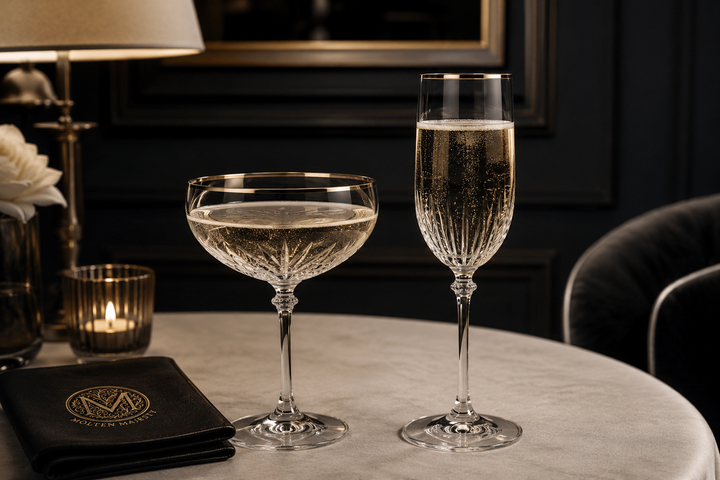
The flute is tall and narrow.
Its shape limits the exposed surface and displays bubbles through a long column of wine. It remains useful for receptions, tray service and formal toasts.
The Platora Champagne Flute follows that tall silhouette.
Coupe
The coupe is broad and shallow.
It gives sparkling wine far more exposed surface and therefore loses dissolved carbon dioxide faster than a flute. Its strengths lie elsewhere: an open drinking experience, a dramatic horizontal silhouette and excellent versatility for cocktails.
The Platora Coupe Glass belongs to that tradition.
The full comparison, including measured research on CO2 loss, is covered in Champagne Coupe vs Flute: Shape, Bubbles and Occasion.
What about stemless wine glasses?
Stemless is a way of supporting the bowl rather than a separate wine category.
A stemless glass can use almost the same bowl geometry as stemmed wine glassware. Removing the stem changes handling, temperature control, stability and storage.
This means a stemless tulip can be a genuine wine glass rather than an ordinary tumbler dressed for dinner.
For the full comparison, see Stemless vs Stemmed Wine Glasses: Which Belongs on Your Table?.
Do you really need a different glass for every wine?
No.
Scientific evidence supports the broader proposition that vessel shape can influence aroma perception. It does not establish that every grape variety requires one uniquely correct commercial glass.
The 2003 Appetite study found measurable differences in odour ratings between glass shapes. The 2015 ethanol-vapour experiment also showed that vessel geometry changes the vapour environment above wine. Both findings make a strong case for taking bowl design seriously. Neither turns a catalogue of dozens of varietal glasses into a household requirement.
A sensible home collection can be much simpler.
If you want one shape
Choose a medium universal tulip.
If you want two
Choose:
- A generous universal or Bordeaux-style glass for reds
- A smaller tulip for whites
If you want three
Add a sparkling wine glass, preferably a tulip or flute according to how you serve it.
If wine is a serious part of the table
Add specialist shapes around the bottles you open most often. A Burgundy glass makes sense for a household that drinks Pinot Noir regularly. It makes less sense as an expensive monument to a bottle that appears once every four years.
From the atelier: read the silhouette before the label
When we look at a wine glass as an object, the varietal name comes second.
First, look at where the bowl reaches its greatest width. That tells you how the wine will spread after a modest pour.
Then follow the wall upward. Does it continue almost straight, flare outward or close decisively toward the rim?
Look at the amount of empty glass above the wine. That space is functional. It gives aromas somewhere to gather and gives the hand room to swirl without creating an incident that requires immediate attention from the table linen.
Finally, consider the base and stem. A generous bowl requires enough support to feel composed when lifted. A narrow white wine glass can tolerate a more delicate visual balance. A very broad Burgundy bowl needs a foot capable of carrying its width without looking timid beneath it.
The most useful glass is coherent from rim to foot.
How full should a wine glass be?
Leave room above the wine.
For still wine, a modest pour that sits around or below the broadest part of the bowl usually leaves enough headspace to swirl and smell comfortably. WSET's tasting guidance specifically recommends a small amount of wine so the glass can be moved without losing its contents.
The visual size of modern wine glasses can make an ordinary serving look strangely lonely at the bottom. That is acceptable.
The empty part of the glass has a job.
Which wine glass shape should you buy first?
Buy according to what you drink.
Choose a Bordeaux or universal shape if your table sees Cabernet, Merlot, Sangiovese, Tempranillo and varied reds.
Choose a smaller tulip if Sauvignon Blanc, Riesling, Pinot Grigio, rosé and lighter whites appear more often.
Choose a broader white wine bowl if Chardonnay and richer whites are central to the cellar.
Choose a Burgundy glass when Pinot Noir or similarly aromatic reds justify the extra space.
Choose a tulip or flute when sparkling wine is a regular ritual. Choose a coupe when cocktails and presentation matter alongside the wine itself.
Molten Majesty's Ascend collection contains several wine-focused forms, including stemmed and stemless silhouettes, while Platora extends the table into coupe and flute service.
Start with the bottle that appears most often. The rest of the cabinet can earn its place over time.
Frequently asked questions
Does wine really taste different in different glass shapes?
Glass shape can change the perception of wine aroma. Controlled research has found that participants rated the same wines differently when served from different glass forms. Taste perception is more complicated, but the evidence is strong enough to treat glass shape as more than decoration.
What is the most versatile wine glass shape?
A medium tulip with a reasonably generous bowl and narrowed rim is the most adaptable option. It can serve many reds and whites without strongly favouring either extreme.
Can red wine be served in a white wine glass?
Yes. The wine remains perfectly drinkable. A smaller bowl simply gives it less room to move and a smaller aromatic chamber than a typical red wine glass.
What is the difference between Bordeaux and Burgundy glasses?
A Bordeaux glass is usually taller and more vertically shaped. A Burgundy glass has a much broader, rounded bowl and a more pronounced inward curve toward the rim.
Is a larger wine glass always better?
No. Larger bowls can provide more surface area and headspace, but very large glasses can be unnecessary for delicate wines, awkward on smaller tables and harder to store.
Do I need a separate glass for rosé?
Usually not. Many rosé wines work comfortably in a crisp white wine glass or a medium universal tulip.