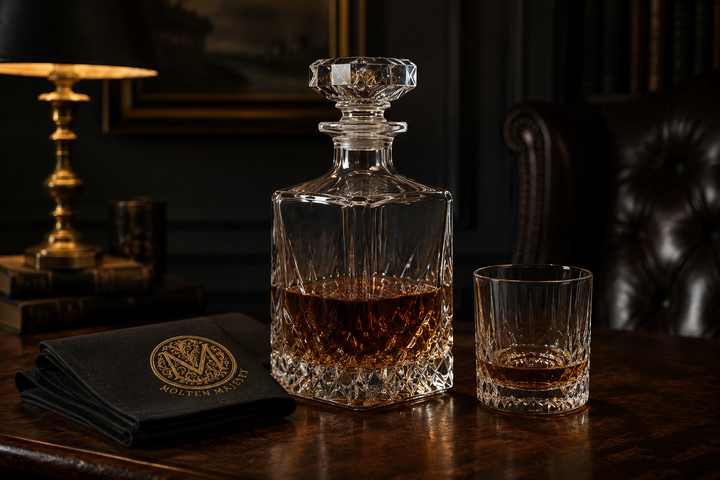
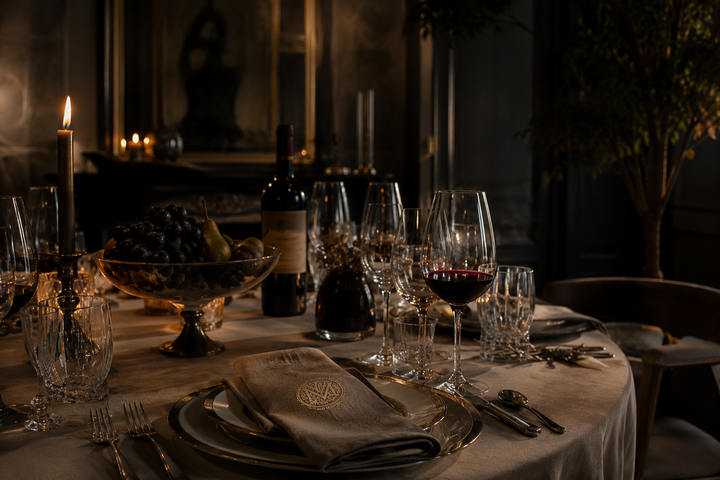
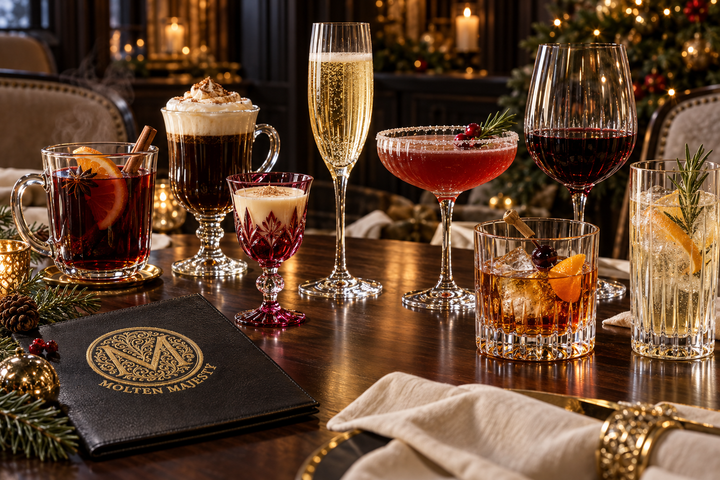
The table should feel prepared for the evening, not burdened by every drink that might appear.
For a dinner that includes cocktails, water and wine, each guest usually needs a water glass and a wine glass at the table. Cocktail glasses can arrive with the drinks before dinner or be brought out only when needed. This keeps the place setting clear and prevents unused glassware from crowding the table. Choose shapes according to the drinks being served, but do not feel obliged to provide a different vessel for every possible variation.
How many glasses should each guest have?
For most dinners, begin with two glasses per guest at the table:
- One water glass
- One wine glass
Add a second wine glass only when two different wines will be served and tasting them separately is important to the meal. Cocktail glasses generally do not need to remain at the place setting once dinner begins.
This is consistent with the basic rule used in traditional table setting: the table should contain the pieces required by the menu, rather than every item the host owns. Emily Post’s guidance describes informal settings as dependent on what is actually being served, with drinking glasses positioned above the knives at the upper right of the plate.
A crowded table may look generous in a photograph. In use, it creates uncertainty. Guests begin wondering which glass belongs to them, stems knock together and the room needed for serving dishes quietly disappears.
The simplest useful arrangement is usually the most elegant one.
Should cocktail glasses already be on the dinner table?
Cocktail glasses are better introduced with the cocktail rather than placed empty at every setting.
If guests are having drinks before dinner, serve those drinks in the sitting room, at the bar or wherever people first gather. The empty glass can be collected before everyone moves to the table, or shortly after they sit down.
This does three useful things:
- It gives the evening a natural first movement.
- It prevents warm, empty cocktail glasses from occupying the table.
- It keeps delicate coupes and martini glasses away from plates, serving dishes and reaching hands.
There are exceptions. A coupe may remain if sparkling wine or a cocktail accompanies the first course. A highball may stay when the same long drink continues through dinner. The decision should follow what the guest is actually drinking.
Do not turn the place setting into an inventory.
Where should water and wine glasses be placed?
Place the water glass above the knives, toward the upper-right side of the dinner plate. The wine glass sits to its right or slightly below it, depending on the available space and the formality of the table.
For a more formal meal with several wines, the glasses can extend diagonally or form a small arc in the order they will be used. Emily Post places the water goblet directly above the knives and positions wine and champagne glasses to its right.
For a normal dinner at home, precision to the millimetre is unnecessary. What matters is that:
- Each guest can identify their glasses easily.
- The glasses do not interfere with the plate or cutlery.
- There is enough room to lift one without touching another.
- The arrangement is consistent from place to place.
A useful visual order is to keep the water glass closest to the guest’s natural reach. It will usually be used most often.
Do you need different glasses for every cocktail?
No. A small collection of well-chosen shapes can handle most drinks served at home.
Cocktail glassware becomes complicated when every recipe is treated as requiring its own specialised vessel. Some drinks do benefit from a particular shape, especially when temperature, ice or aroma is central to their character. That does not mean the host needs a separate cabinet for each formula.
A practical cocktail-glass collection
| Glass | Best suited to | Other useful roles |
|---|---|---|
| Coupe | Champagne cocktails, sours, daiquiris, drinks served without ice | Sparkling wine, desserts |
| Highball | Long drinks with ice, soda or tonic | Water, juice, iced tea |
| Tumbler or rocks glass | Spirits, short cocktails and drinks over ice | Water and informal serving |
| Wine goblet | Wine | Spritzes, water, simple mixed drinks |
| Flute | Sparkling wine and drinks where preserving bubbles matters | Toasts and formal service |
The choice should also account for how the evening moves. A broad coupe is beautiful when guests are standing still. It becomes less practical when they are carrying plates, changing rooms or gathering closely around a small table.
Form should support the occasion rather than merely photograph well.
Can the same glass be used for cocktails and water?
Some shapes can do both very comfortably.
A highball is one of the most adaptable glasses in a home. It can hold water, soda, juice, a gin and tonic, a Collins-style drink or any long cocktail served over ice. A substantial tumbler can move between water, whisky and shorter mixed drinks.
Wine goblets are also often used for water, particularly on a decorative table. Their elevated shape gives the setting rhythm, while a broad bowl provides a generous capacity.
What matters is sequencing. A glass should not carry the residue or aroma of one drink into another unless the transition is intentional. A tumbler that held a smoky spirit should not simply be topped up with water for the next course.
Versatility is useful. Confusion is not.
How should you choose the wine glass?
Choose the wine glass according to the wine being served, the scale of the table and how specialised you want the service to become.
For most dinners, a well-proportioned universal wine glass is sufficient. It should have enough bowl volume to allow the wine to move, a rim that feels comfortable and a shape that suits both the table and the hand.
Larger bowls are often associated with fuller red wines, while narrower bowls are commonly used for whites and lighter styles. Those distinctions can matter, but they should not overwhelm the practical needs of hosting.
A universal glass is particularly sensible when:
- Both red and white wine may be offered.
- Cabinet space is limited.
- The table is small.
- Guests are more interested in conversation than technical tasting.
- The host prefers one coherent glassware design.
Use two wine glasses when the meal has been planned around distinct wines and keeping them separate adds something real. Otherwise, replace or rinse the glass between wines rather than surrounding each plate with unused stems.
Should water glasses match the wine glasses?
They can match, but they do not have to.
Matching glassware gives the table a formal, composed character. A coordinated water goblet and wine glass can create a strong vertical rhythm, especially when both share a cut pattern, coloured overlay or metallic rim.
Using a tumbler for water creates a quieter arrangement. The difference in height helps guests distinguish the glasses and reduces the number of stems around the plate.
Both approaches work. The decision is primarily visual and practical.
Choose matching stemware when:
- The table is spacious.
- The dinner is formal or ceremonial.
- The glassware itself is central to the setting.
- The repeated pattern brings order to varied plates or linens.
Choose a water tumbler when:
- The table is narrow.
- Several serving dishes will be present.
- The wine glass is already highly decorative.
- A more relaxed mood suits the evening.
There is no etiquette requirement that water and wine be served in identical families of glass. Consistency can come from colour, proportion or material rather than an exact match.
How do you mix clear and coloured glassware?
Give one of them the leading role.
If the wine glasses are richly coloured, clear water glasses allow those colours to remain distinct. If the water goblets carry an emerald, amber or ruby overlay, clear wine glasses prevent the setting from becoming visually dense.
A table filled with several strong colours can work, but the palette needs an organising idea. Repeat one colour, keep the silhouettes related or allow the plates and linen to remain restrained.
Consider what each drink will look like inside the glass.
Clear glass reveals the colour of wine and cocktails without interference. Coloured glass changes the visual experience, which may be desirable for water or a clear drink but less useful when the appearance of the wine matters.
A simple working rule is:
Use coloured glass where atmosphere matters most, and clear glass where the appearance of the drink matters most.
This is not absolute. It is a useful starting point.
How can you avoid crowding a small table?
Remove any glass that does not need to be there yet.
A small dining table should not carry the entire evening from the beginning. Cocktail glasses can be cleared before dinner. A champagne glass can arrive with the toast. A second wine glass can be placed just before the relevant bottle is poured.
You can also reduce crowding by:
- Using low water tumblers beside stemmed wine glasses.
- Choosing narrower bowls rather than oversized tasting glasses.
- Keeping serving bottles on a sideboard.
- Pouring water from a carafe rather than placing several bottles on the table.
- Removing finished glasses before introducing the next drink.
- Avoiding a tall or wide centrepiece that competes with the glassware.
The host does not need to display foresight through quantity. Good preparation is often visible in what has been kept back.
What is the best order for serving cocktails, water and wine?
Water should be available from the moment guests sit down. Cocktails generally come before dinner, while wine begins with the meal or a particular course.
A natural sequence might look like this:
- Arrival: Offer a cocktail, sparkling wine or non-alcoholic aperitif.
- Seating: Clear finished cocktail glasses and ensure water is already poured or easy to reach.
- First course: Introduce the first wine if one has been chosen.
- Main course: Continue with the same wine or replace it with another.
- After dinner: Bring fresh glasses for spirits, digestifs or a final cocktail.
This order keeps each drink connected to a moment. It also gives the host time to manage glassware in smaller groups rather than placing everything on the table at once.
Water is the exception. It should never feel rationed or ceremonial.
What if some guests are not drinking alcohol?
Give non-alcoholic drinks the same attention as wine and cocktails.
Do not reduce the alternative to an ordinary glass of water while everyone else receives carefully chosen vessels. A sparkling botanical drink, alcohol-free cocktail or infused water can be served in a coupe, goblet or highball according to its character.
The glass should communicate that the drink was planned rather than improvised.
At the table, there is no need to preserve a strict visual distinction between alcoholic and non-alcoholic service. Use a shape that helps the guest identify their drink and suits its temperature, volume and ingredients.
A generous host does not make abstinence visually conspicuous.
How many spare glasses should a host keep ready?
Keep at least one or two clean replacements of each principal shape nearby.
A glass may chip, break or be left in another room. A guest may change from white wine to red, or someone may join unexpectedly. Replacements should be available without requiring the host to begin washing glassware during dinner.
For a gathering of six, a practical reserve might include:
- Two extra water glasses
- Two extra wine glasses
- One or two additional cocktail glasses
- One extra sparkling-wine glass when a toast is planned
They do not need to wait on the table. Keep them on a sideboard, bar cart or accessible cabinet shelf.
Preparation should reduce interruption, not increase display.
From the atelier: judge the glass in motion
Glassware is often selected while empty and still. Hosting reveals how it behaves.
A coupe that appears perfectly balanced on a shelf may feel broad when carried through a room. A heavily cut goblet may bring wonderful light to the table but require more space between settings. A narrow highball may be easier for a guest to hold while standing.
Before a dinner, place the intended glasses on the table and sit down.
Reach for the water. Lift the wine glass without looking directly at it. Imagine a serving dish arriving from the side. Check whether the stems touch when two guests make a toast.
These small rehearsals reveal more than viewing each object alone.
Good glassware does not merely suit a drink. It suits the hand, the table and the movement of the evening.
| Type of evening | Cocktail service | Water service | Wine service |
|---|---|---|---|
| Casual dinner for four | Highballs or tumblers before dinner | Low tumblers | One universal wine glass |
| Formal dinner | Coupes or flutes before seating | Water goblets | One or two wine glasses according to the menu |
| Cocktail-led supper | Drink-specific glass retained where practical | Separate water glass | Optional universal wine glass |
| Small-table dinner | Serve cocktails away from the table | Compact tumbler | Narrow universal wine glass |
| Celebration dinner | Coupes or flutes for the opening toast | Coordinated goblets or tumblers | Wine glass introduced with the meal |
| Mixed alcoholic and alcohol-free gathering | Appropriate glass for each drink, regardless of alcohol content | Water glass for everyone | Wine glass only for those drinking wine |
How do you care for several types of glassware during a party?
Clear used glasses away from the busiest parts of the room, but do not stack them.
Place them on a stable tray or sideboard with enough separation to prevent contact. Do not drop cutlery, citrus peels or cocktail picks into delicate glasses. These can scratch the interior or place unexpected pressure on the rim.
Rinse glasses promptly when wine, citrus, sugar or strongly coloured ingredients have been left inside. For hand washing, use warm water and handle each piece individually. Riedel recommends rinsing glassware after use so that wine or drink residue does not remain on the surface.
When drying stemware, avoid holding the foot in one hand while forcefully twisting the bowl with the other. Let the cloth move gently around the glass rather than using the stem as leverage.
Care begins before the final guest has left.
Which glassware should you buy first for entertaining?
Begin with the shapes that can work across the greatest number of evenings.
A useful first collection includes:
- Water tumblers or goblets
- Universal wine glasses
- Highball glasses
- Coupes or another preferred cocktail shape
From there, add specialised pieces according to what you genuinely serve. Flutes make sense for a household that opens sparkling wine often. Rocks glasses suit a regular whisky or short-cocktail ritual. A second wine shape is worthwhile when wine forms a serious part of the meal.
The collection should grow from use.
A cabinet full of specialised glasses can be impressive, but an effective hosting collection is the one whose pieces regularly leave the shelf.
The table should anticipate the evening, not explain it
Cocktails, water and wine do not all need to appear at once.
Begin with a cocktail glass when guests arrive. Set water and wine at the table. Introduce additional glasses only when the drink requires them. Use clear and coloured pieces with intention, and allow the scale of the table to determine how much remains visible.
The result should feel effortless to the guest.
They should know which glass is theirs, find water without asking and receive each new drink in a vessel that feels suited to it.
The work lies in making those decisions beforehand. The pleasure lies in no longer needing to think about them once the evening begins.